
Kastro, the control panel we wrote for your cluster.
One panel runs every server in your private cluster: websites, applications, databases, mail and certificates. We write and maintain it ourselves, so when you need something changed, it changes.
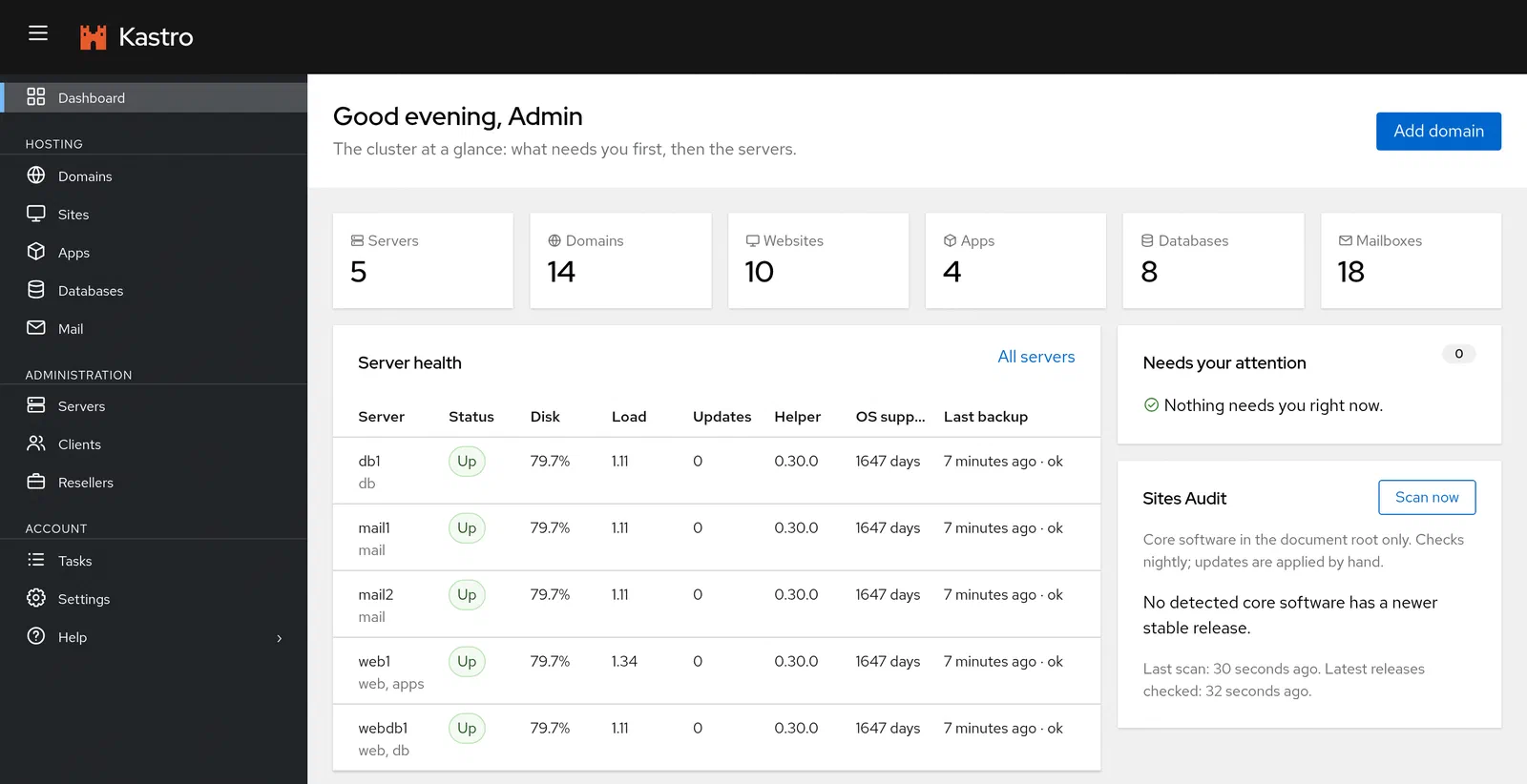
Every site in its own space
- Its own Linux user, PHP-FPM pool and SFTP jail.
- PHP 8.5, with settings you can change within safe limits.
- Static sites and single-page apps as well as PHP.
- Password-protected folders for staging copies, large downloads or wp-admin.
- Security headers by default, and an optional switch to accept traffic only through Cloudflare.
- Free HTTPS from Let's Encrypt, renewed every night. A failed renewal keeps the live certificate.
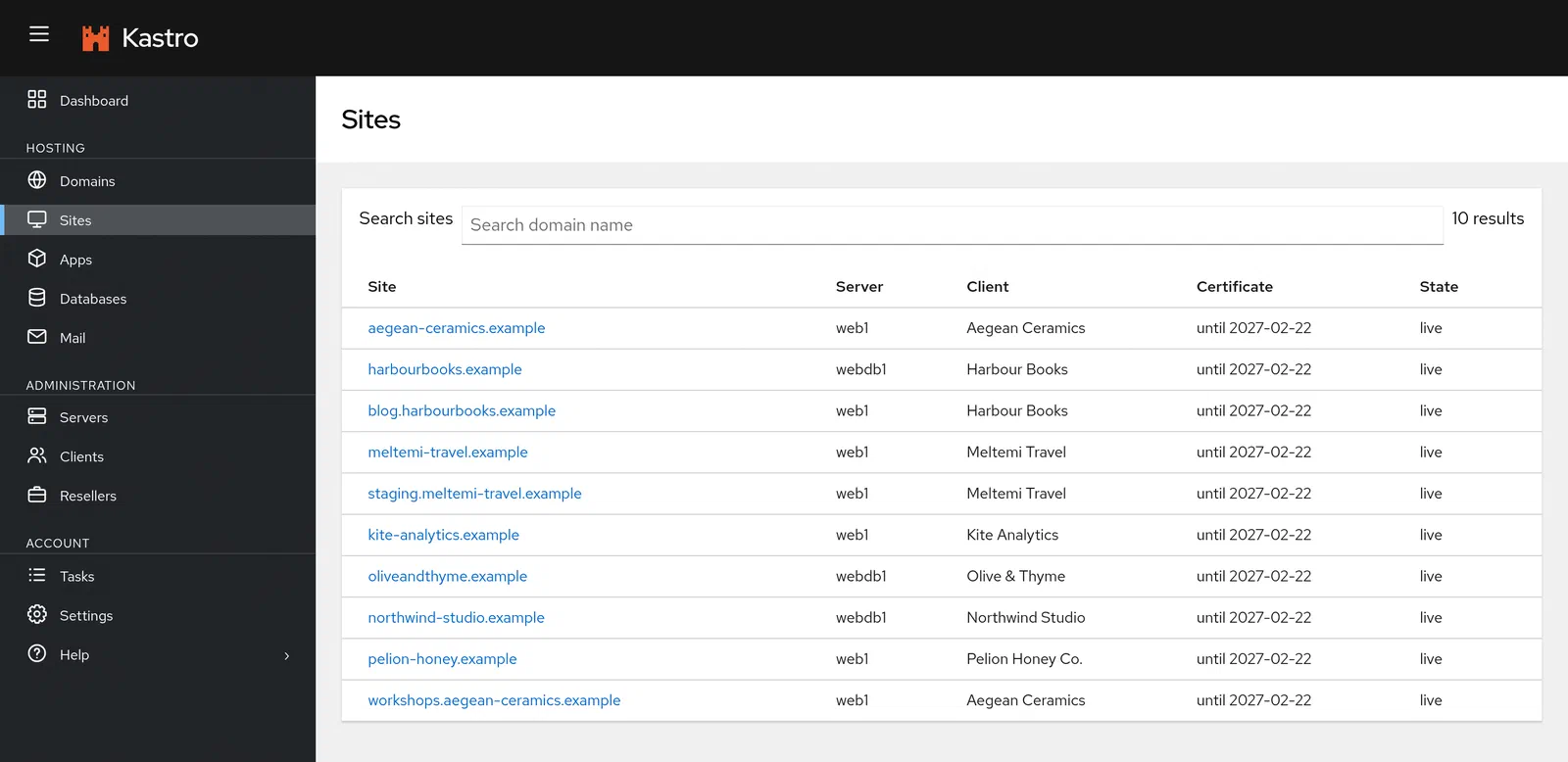
Deploys from CI, rollbacks in one step
- Your pipeline uploads a build with a deploy token. It needs no SSH access.
- Every archive is checked before it goes live.
- The switch happens at once, and the last five releases stay on the server.
- An optional command runs just before the switch, such as php artisan migrate.
- Rolling back to an earlier release is one click.
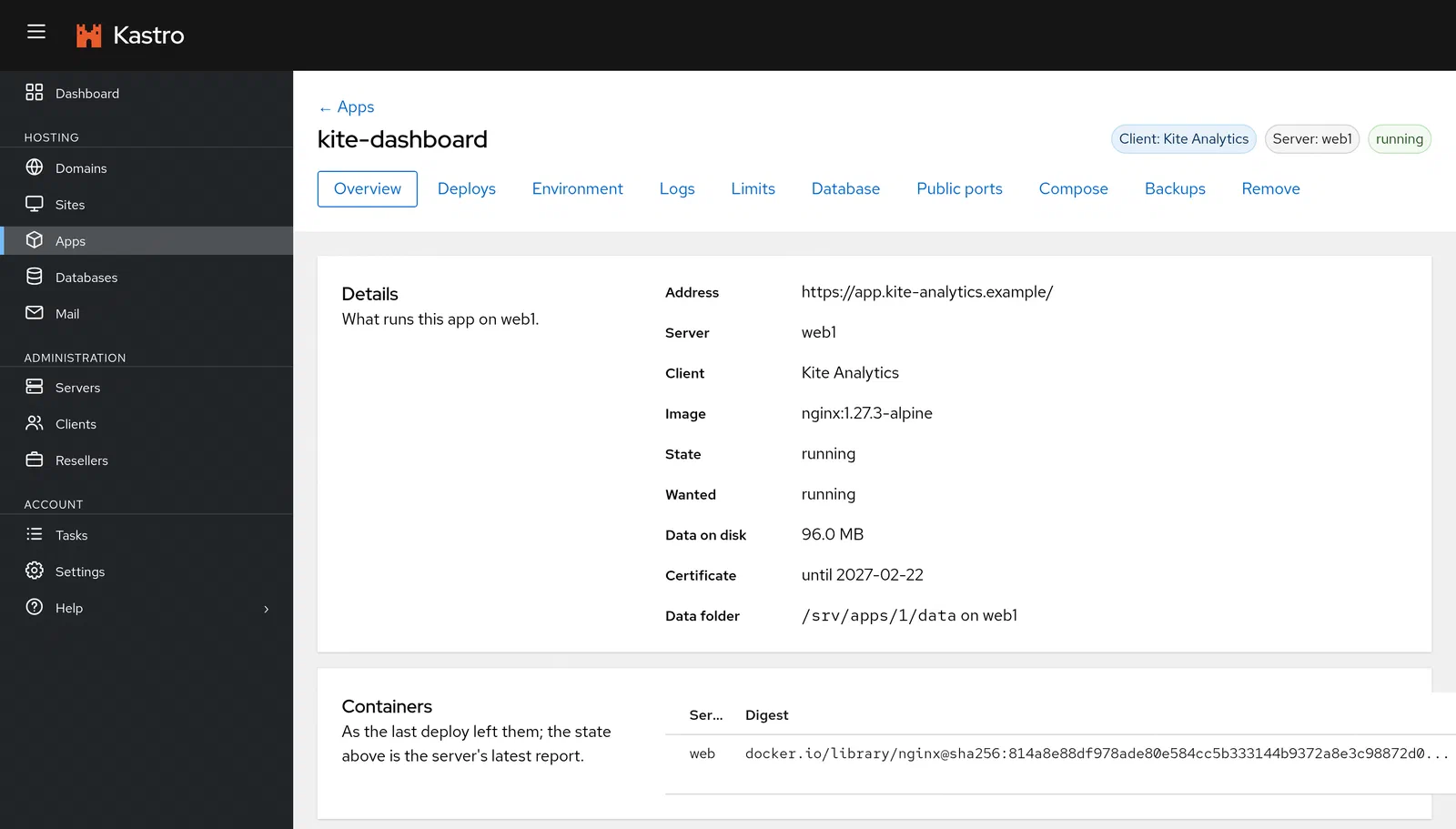
Docker and Compose, without the sharp edges
- Images are built in CI, never on the servers.
- Apps are deployed by digest, so a rollback returns exactly the same image.
- Memory and CPU limits for each app.
- Privileged containers and other risky Compose options are refused.
- Environment values are stored encrypted.
- An app can be stopped behind a holding page.
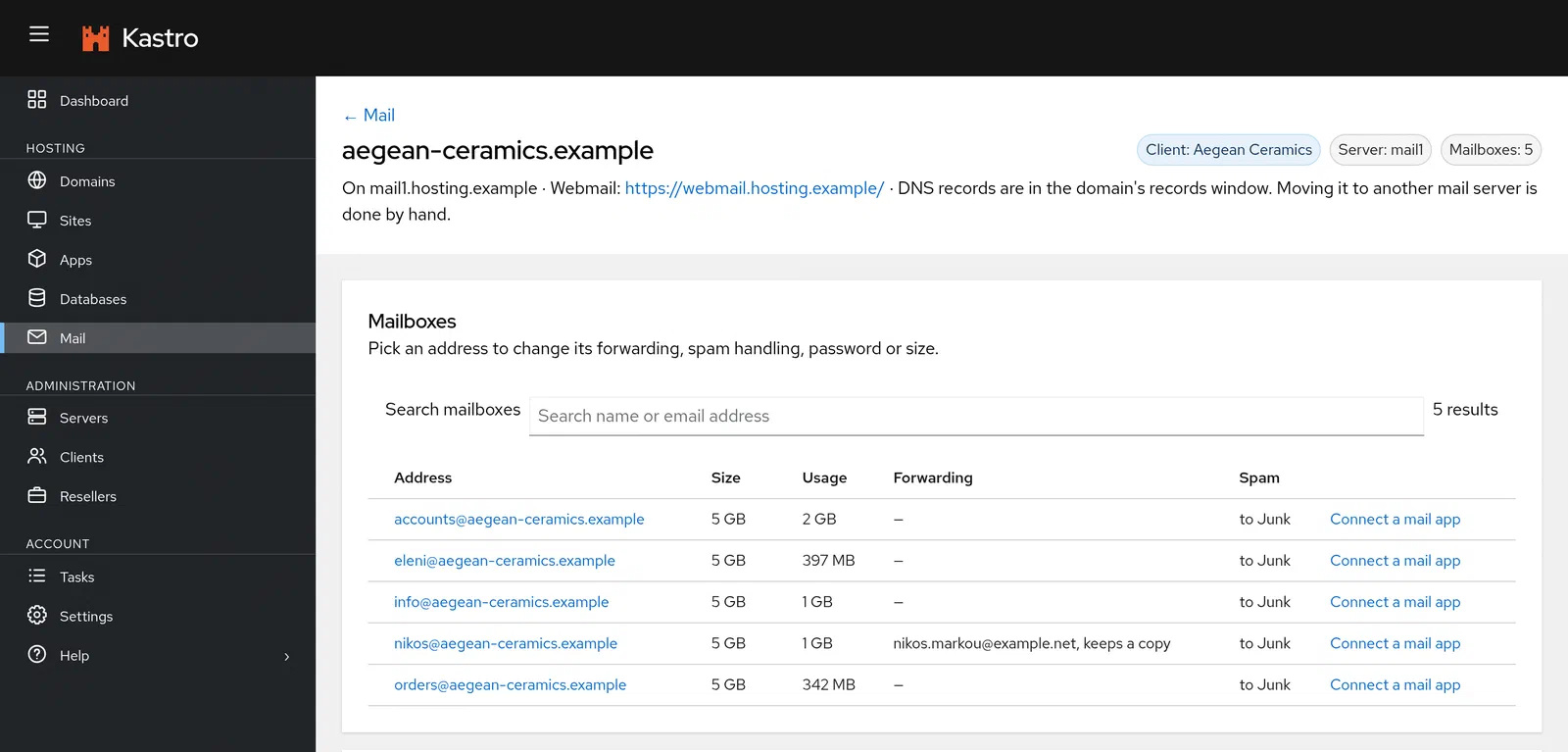
Mail for every domain, set up properly
- Postfix, Dovecot, Rspamd and Roundcube webmail.
- SPF, DKIM and DMARC generated for every domain.
- Aliases by the thousand, with CSV import and export.
- Forwarding that keeps a copy, while spam goes to Junk and is never forwarded.
- Mail apps set themselves up: autoconfig, Apple profiles and Outlook.
- Mailboxes moved from another host keep their passwords.
See every change before it happens
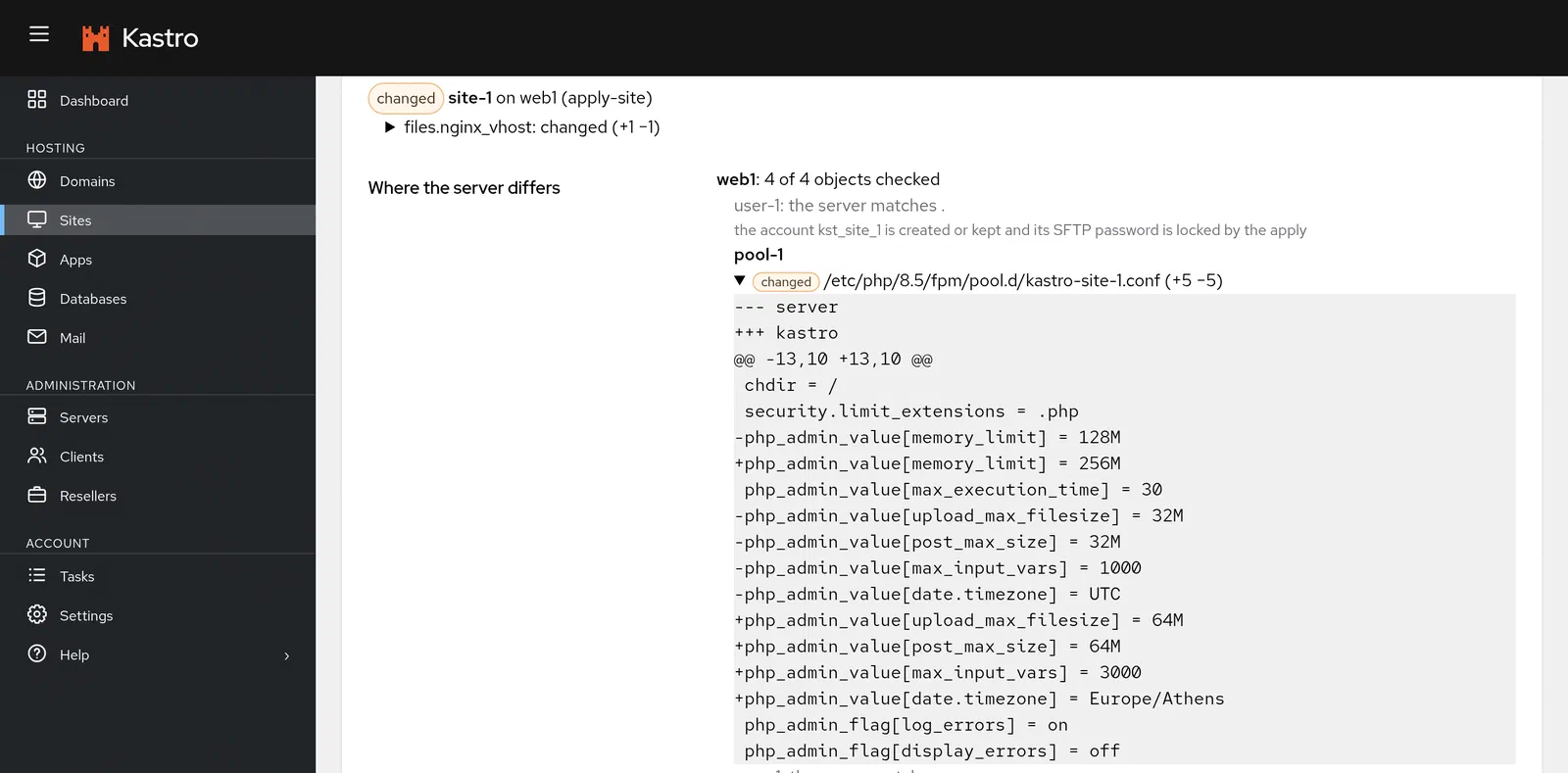
- Each change shows a line-by-line preview of what will change on the server.
- The preview also shows manual edits the change would overwrite.
- Configuration is validated before it goes live.
- Every task is safe to run twice, and servers take one change at a time.
- An audit log records who did what, and when.
Built to stay boring
Kastro puts stability before features. These rules don't bend.
No agents
The panel reaches each server over SSH, through a small helper that knows a fixed list of 36 actions and nothing else.
Stock Ubuntu only
Ubuntu 26.04 LTS with packages from the Ubuntu archive, so every server stays updatable with apt.
One source of truth
The panel's database describes every server. A restored panel checks the servers before it trusts itself.
Your DNS stays yours
Kastro generates the records each domain needs and checks them, but never edits your DNS.
Audits, not surprises
A nightly report flags WordPress, Joomla, Drupal, MyBB and phpBB installs that have fallen behind.
Backups that don't need the panel
Every server backs itself up on its own schedule, so backups carry on even if the panel is down.
Questions
Is there cPanel or a file manager?
No. Files go up over SFTP or from your CI pipeline, and the client area covers mailboxes, databases and restores. Everything else, we do for you.
Which PHP version do you run?
One: PHP 8.5 from the Ubuntu archive, on every server. That keeps every site patched on the same schedule, and we help bring older code forward.
Can our developers use an API?
Yes. Deploy tokens let your CI release a site or an app, and a read-only API lists servers, sites, mailboxes, databases and apps.
Can we host our own clients on it?
Yes. Kastro has a reseller role that serves its own clients on the servers assigned to it.